
Lent — a Time of Lengthening
 Lent occurs during the 46 days before Easter, starting with Ash Wednesday. This year, Ash Wednesday is 22 February. Now some of you are probably saying, “Wait a minute, Lent is only 40 days, not 46.” Yes, that is correct; six of those 46 days are Sundays, which are not counted as part of Lent. Lent ends on the Saturday before Easter.
As a child, when I first heard about the season of Lent, I was confused. Why would the Church celebrate something with the name of the past tense of the word lend? My grandfather and my parents would talk about having lent money to someone or that the bank lent them money. It was confusing, but as it turns out, Lent has nothing to do with lending or borrowing.
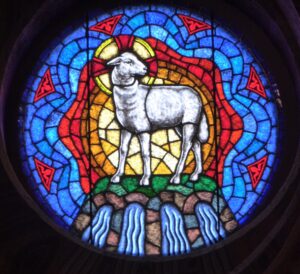
Lent is about preparing for a gift. The precious gift of Jesus Christ, who was the ultimate paschal lamb, sacrificed for us so that we might have eternal life. As the Gospel of John tells us in 3:16, (I like the King James Version of this verse), “For God so loved the world, that he gave his only begotten Son, that whosoever believeth in him should not perish, but have everlasting life.”
As for why we call it Lent, The United Methodist Book of Worship explains that “Lent comes from the Anglo–Saxon word lencten, which means ’lengthen’ and refers to the lengthening days of spring.” It goes on to explain that “Lent began as a period of fasting and preparation for baptism by converts and then became a time of penance for all Christians.” In the ancient church, baptism of people coming to faith was preceded by a focused period of instruction and indoctrination. This was in preparation for the baptism on Easter and associated First Communion.
As for why Sundays don’t count and the 40 days, Sundays are always “mini-Easters” celebrating the resurrection of Christ and the promise of life eternal. Therefore for 40 of 46 days of Lent, we may self-deny, sacrifice, give up an activity or specific thing, or make extra effort to focus and reflect on Jesus Christ, what he taught, how he suffered, died, was buried and arose for us. On Sundays we celebrate that gift.
Why 40 days? The number 40 is rather significant in the Bible. Noah endured 40 days and 40 nights of rain by floating within the ark; Moses led God’s people from Egypt through the wilderness for 40 years. Add the fasting factor in, and we see Moses went up on the mountain, fasting for 40 days and 40 nights in the presence of the Lord, and received the Ten Commandments (Exodus 34:28); Elijah ate and drank his fill, then traveled 40 days and nights to reach the mountain of God (1 Kings 19:8); and Jesus fasted during the 40 days and nights in the wilderness where he was tempted by the devil.
Fasting and sacrifice for 40 days has biblical precedent and was always in preparation for something important. Realistically, we know now that literally going without any food or liquid for about four days will very likely cause death. Some self-denial, giving up something, a sacrifice, or taking on a new practice or activity is to be about getting closer to God. For instance, giving up meat means the money spent on meat could be given to the needy. Cutting out TV for certain times means the time could be used for studying the Word of God. Signing up to work shifts at a shelter or helping with cleaning up a stream or park are about being the hands and feet of God for more than normal during Lent. Maybe we join a new Lenten study, lead a Bible study or give up our fancy daily coffee and put those dollars towards UMCOR or to buy school supplies for kids in need.
The possibilities to help others and grow closer to Christ are endless. Whom might you bring to Christ this Lenten season? It could be directly or indirectly by showing people God’s Love.
As we prepare for the miracle of Easter, let’s not forget what Christ taught during the time He was among God’s children as fully human. 1. Love God. 2. Love our neighbors as ourselves – both of which include making disciples of all nations… teaching them to obey everything Jesus commanded us.
By Brad Duty, Foundation Services Advisor
Images: Aaron Burden & Steve Sharp, courtesy of Unsplash